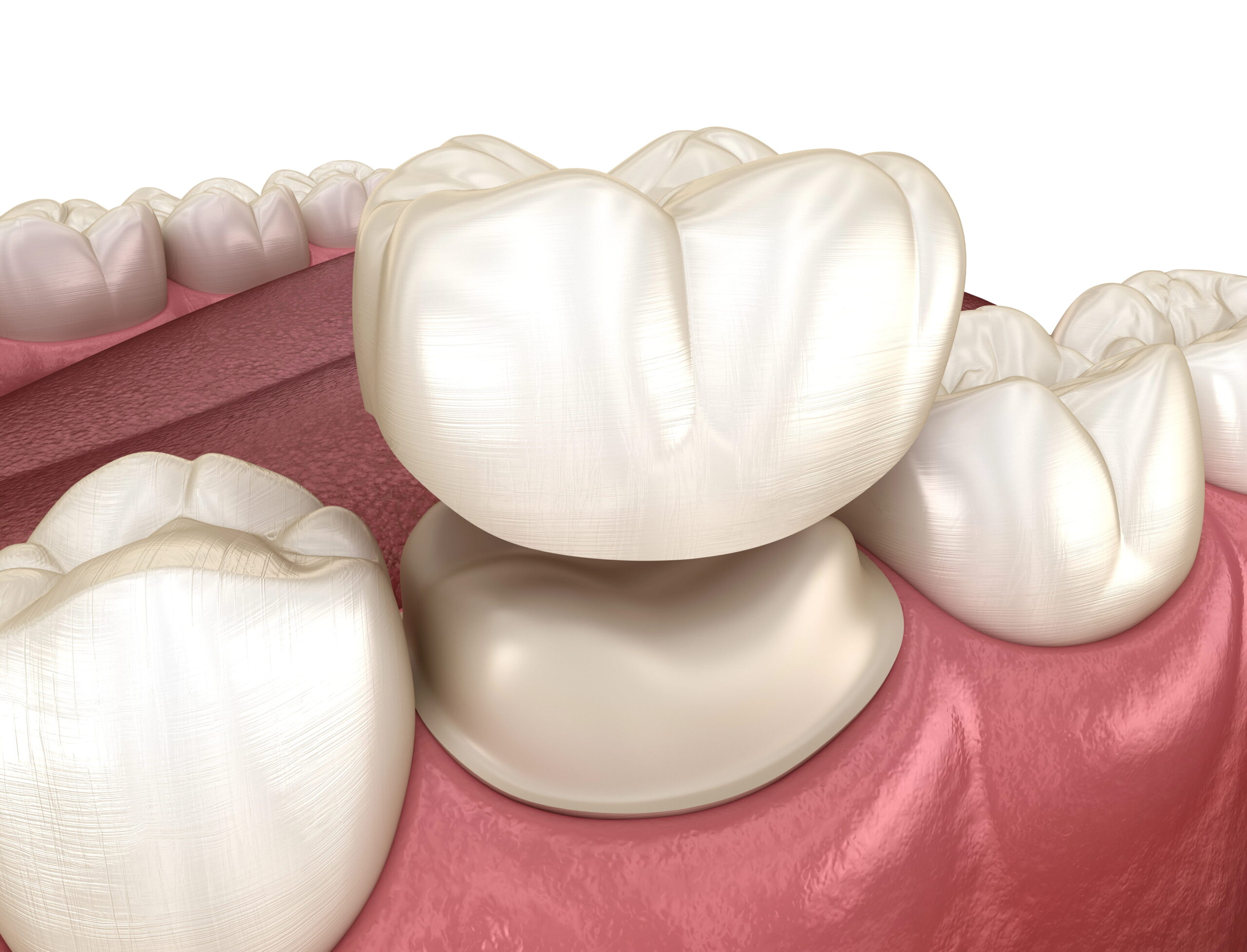



Permanent teeth are meant to last a lifetime, but sometimes life has other plans. Your dentist may recommend extracting one of your teeth for a variety of reasons: to remove a decayed or infected tooth, to remove a tooth loosened by periodontal disease, to correct crowding, to prevent an impacted tooth from harming your oral health, to remove a cracked or severely chipped tooth, etc. The extraction of a tooth is a very common, safe procedure, but you may wonder how it works exactly. How is a tooth extracted?
How Is a Tooth Extracted?
The process of extracting a tooth varies based on the tooth’s position, orientation, condition, and more. In this post, we’ll be focusing on a simple extraction procedure, used to extract a tooth that is visible (above the gum line). If a tooth is not visible (i.e., it hasn’t erupted through the gum line), a slightly more complex procedure will be necessary, involving an incision into the gums to remove the tooth.
So, how is a tooth extracted?
Step 1: Numbing the Site
First, to ensure that you don’t feel any pain during the procedure, your dentist will numb the tooth, gum, and surrounding bone tissue. A needle is used to deposit local anesthetic into the tissue. In some cases, other sedatives may be used, such as nitrous oxide (also known as “laughing gas”) or an oral sedative. If you experience any pain after this point, notify your dentist so that more anesthetic can be applied. You should only feel pressure during the procedure.
Step 2: Extracting the Tooth
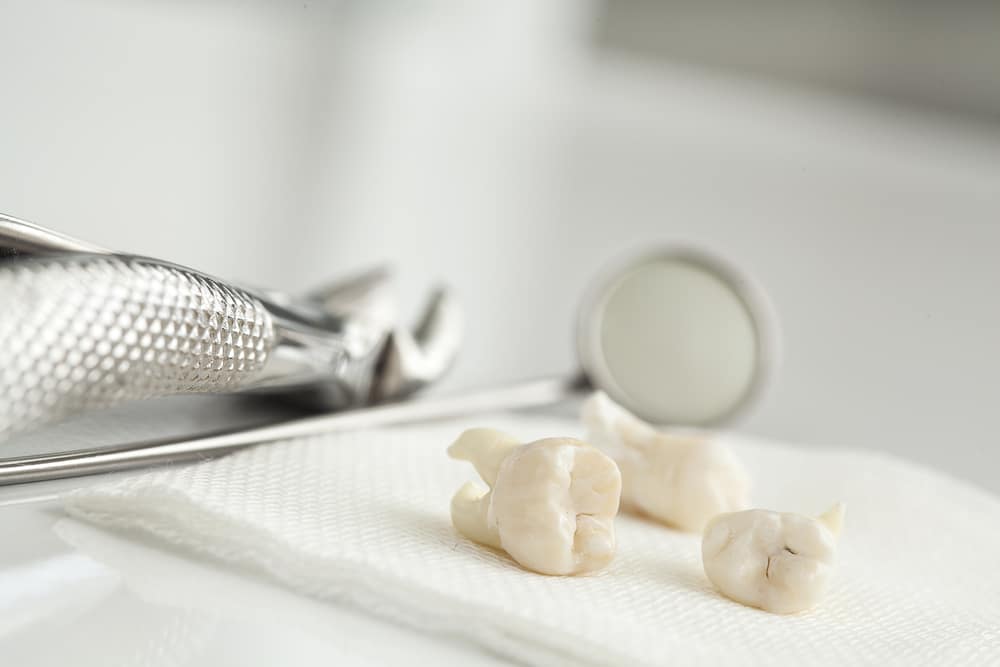
Next, the tooth is extracted from its socket in the jawbone. Typically, your teeth are firmly secured in their sockets, held in place by ligaments. To remove a tooth, your dentist must rock the tooth back and forth a little against the socket walls (which are made of a relatively spongey bone) using tools like extraction forceps and dental elevators. This process enlarges the socket enough that your dentist can remove the tooth. The tooth is separated from the ligament and pulled out of the socket. In some cases (for example, if a dental implant will be replacing your extracted tooth), your dentist may insert a small amount of bone-grafting material into the socket to preserve the bone volume.
Step 3: Cleaning Up the Site
After that, your dentist will use water to wash out the socket, removing any tooth fragments or loose tissue. Gauze will be applied with pressure to control the bleeding, and you may be asked to keep it there for up to an hour. In some cases, especially if several teeth are extracted in a row or a surgical extraction has been performed, the extraction site will be stitched up afterward.
Step 4: Post-Operative Care
Following the procedure, your dentist may recommend that you take non-steroidal, anti-inflammatory drugs such as ibuprofen or aspirin to control discomfort and swelling. You may be advised to hold an ice pack against your cheek to prevent swelling as well. Sometimes antibiotics are prescribed to prevent infection. To avoid aggravating the wound, you may also be told to follow a soft diet that doesn’t require much chewing. For more information on what to eat, check out our blog post What to Eat After Tooth Extraction.
_____
If you’ve never had a tooth extracted before, it’s normal to feel a little nervous beforehand. Feel free to ask your hygienist and dentist any questions you have about the procedure or post-op care.
If you’re looking for an experienced, reliable, and friendly dentist near Springfield, Missouri, contact Keen Smiles Family Dental. Dr. Wilkinson and his team will give you the personalized treatment you deserve using state-of-the-art technology. For exceptional and comprehensive dental care, schedule your first appointment today by calling 417-708-0556 or requesting an appointment online. We look forward to hearing from you!